Saturday, August 24, 2013

Long time no see. My excuse: boyfriend and Facebook

I'm very embarrassed to admit I have 6 posts in draft form.  Since I haven't posted since, what, March?... It's time I get my blogging juices flowing again by just putting SOMETHING live on the internet and then recommitting to posting more frequently (and to finishing those 6 posts!).

The interesting thing is I don't have readers that follow everything I post, it's more like a bunch of random people who come to learn about one particular thing I have blogged about and pops up on their search engine.  Which is great, I'm glad to be an educational source in any capacity.  But it does kind of lend itself to me being lazy.  People can still access my very popular posts anytime, so I don't feel like I'm letting anyone down or anything.  In fact, the posts I do like this one that doesn't have a specific scientific topic, usually don't even get read.

This blog has been my life, my love, my passion for almost 2 years, but the honest truth is - I got a boyfriend in March and since then my "free time" has no longer been used on blogging!  I have, however been doing lots of awesome real-life stuff.  Here, I'll put some pics to prove it! (Posted at the bottom.)

But I miss my blog and I feel I've been neglecting a huge part of "me", and I need to get back to it.

School starts Monday so this is a good chance to focus more on science and learning- my blog helps me do that by focusing my own studies and expanding on them.  Luckily I am taking NEUROSCIENCE this semester, and I'm so excited you don't even know!  So I bet you'll be seeing lots of posts related to that topic.

I think another reason for my recent blog laziness is that I got more involved on Facebook.  I found lots of really awesome science pages that post way cool stuff, so I've been getting my science fix that way.  Some of my favorites are: Science Is AwesomeGive a S*** About Nature, All Science All The Time, Nerds Do It BetterScience: The Magic of Reality, Science Alert, and lots more.  I get posts from probably 20 different places, it's awesome.  What I need to actually do is find out the info there, and then post it here!  I will try to start doing that and getting the info out to more people in Google search land.

So, here we go, another semester of awesome learning, coming right up!

Spelunking 3/14/2013

Holding a real human brain at The Leonardo 3/16/2013
Post on this


Hiking by Rock Canyon 3/29/2013

Hiking in the rain up Dry Canyon - found a deer carcass
Post on this

Visit to the Zoo - a friend of my boyfriend gave us a personal animal show :)

Zoo 4/29/2013

Backpacking up Dry Canyon 5/11/2013

I built a fort on Mother's Day 5/12/2013


Collared Lizard on a waterfall hike 5/20/2013

First time River Rafting!  Woohoo!  5/20/2013

Hiking a little peak in Roosevelt

Touching a snake from the Bean Museum


A sunset hike up dry canyon with the boys

Climbing trees at the duck pond
Found this weird animal up the tree

While camping, found this great part of the river to play in, in Spanish Fork 6/2/2013 


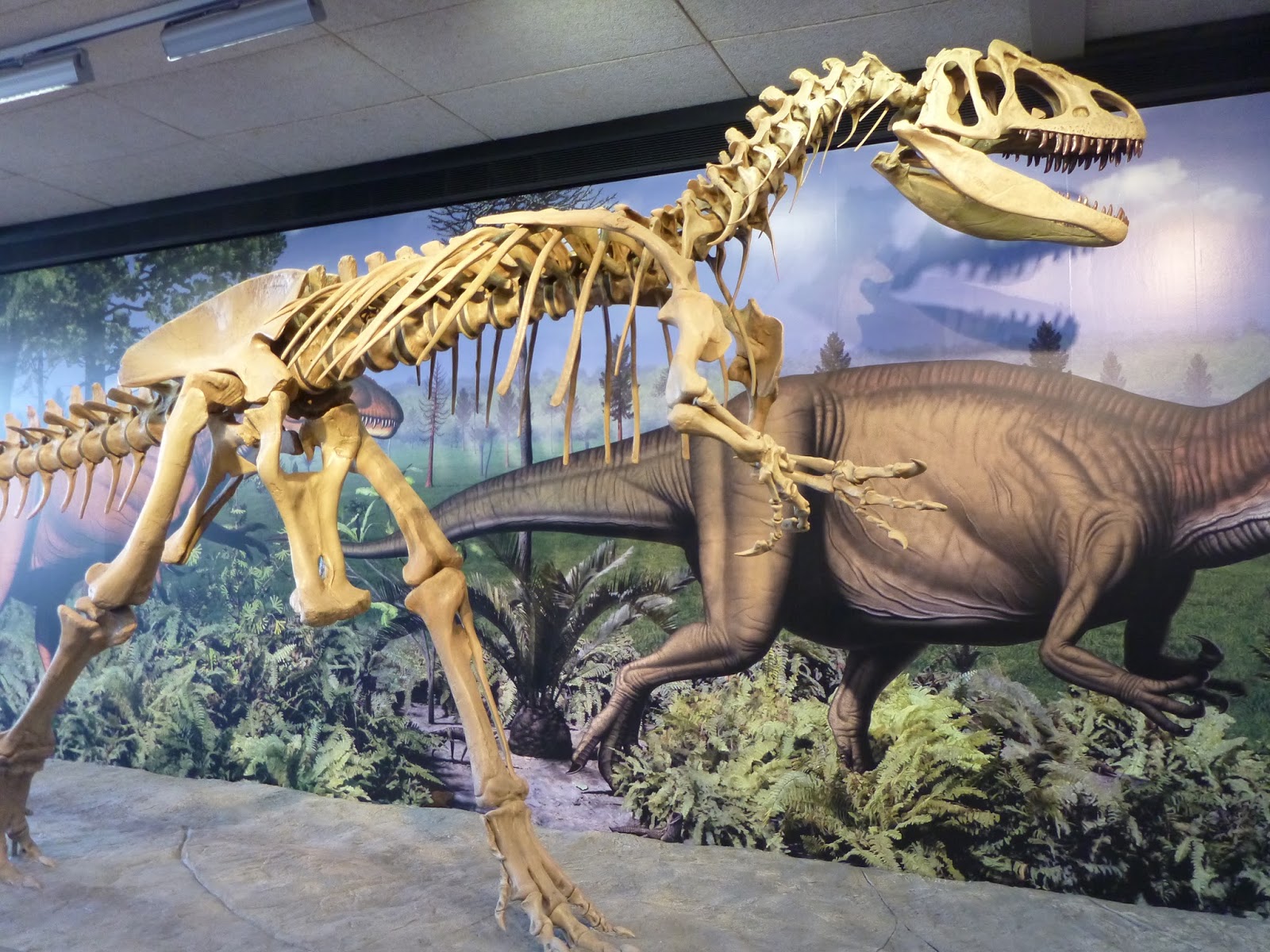
Dinosaur National Monument! 6/30/2013
I love bones!

Rain in Denver, Colorado 7/1/2013

Backpacking in the Rocky Mountains in Denver 7/3/2013


I got to be a camp counselor at Nature High Summer Camp! 7/8 - 7/13/2013
Post in the works


My boyfriend made a Portal cake for my birthday! :D 7/13/2013

We finished the summer off with a visit to the hospital (appendectomy).  At least a visit from the Kid History guys brightened things up.


Wednesday, April 17, 2013

Kidney Physiology


Great overview


Urine Production Video - Osmotic Gradients

This is kind of fast, but it shows the counter-current diffusion of water and ions from the Nephron loop and vasa recta.

.


Here's a fun video - why coffee and alcohol make you pee more.


Wednesday, April 10, 2013

Respiration, Oxygen, and Hemoglobin

By decreasing pressure inside the thoracic cavity, we are able to inspire air.  By contracting the diaphragm, intercostal muscles, and others, we increase the size of the thoracic cavity, which in turn lowers the pressure to the point that it is lower than the outside air, causing a pressure gradient so the air rushes into the lungs.  To exhale, it is the opposite- relax the muscles, decrease the space in the cavity, which increases the pressure inside until higher than outside, so the air rushes out to where the pressure is lower.

This video is a good summary.  The embedding doesn't work, so you'll have to click the link instead.  Just left the embed on there for the picture. :)

Partial Pressure
Total Pressure of air can be broken into the partial pressures of all the gases contained in that air.  For instance, if the atmospheric pressure is at 760 mm Hg, and 20% of that is Oxygen gas, 80% Nitrogen gas, then the partial pressure of O2 would be 20% of 760 = 152 mm Hg.  Partial Pressure of N2would be 80% of 760 = 608 mm Hg.
This illustrates how increasing the pressure, as in the B picture, causes more gas to diffuse into the liquid.  A simple way to think about it is just that the higher the partial pressure of that gas, the less space it has to bounce around in the air, so more of it will end up in the liquid.

Here's a long video on partial pressure and gases getting into solution, I didn't watch the entire thing yet but it looks like a good detailed explanation for those who feel they could use more information.

Tuesday, April 9, 2013

Deer Carcass - Determining the Cause of Death

I was wandering around the Dry Canyon area with my boyfriend and we ran across some awesome stuff.  First off, we found a partial skull, which I of course kept, and not far off, we found a mule deer carcass!  There was fur everywhere and even looked as though the animal had been dragged to a more protected area in the bushes, as you can see in this picture:

Here I am next to the carcass, holding the skull

However, it didn't appear that any of the bushes were broken from the animal being dragged in there, and the way the animal was prostrated (particularly the position of the front limbs) didn't seem to indicate dragging but almost rather that it had laid down there.

See my geeking-out face?  Also notice the front limbs curled neatly under the animal.
So, obviously I'm no expert in forensics or animal behavior, but it was fun to try to guess how the animal died and how its body came to be where and in what condition it is.  Did it die of natural causes, and was later ravaged by scavengers who tossed hair to and fro so the surrounding area is littered with it?  Did a predator kill it and drag it out of the way?  Could it even have been a cougar cache at one point?  Let's look at each possibility.

Cougar Cache
There is evidence that could be consistent with dragging a killed animal to a safer place.  However, there is no evidence that any attempt was made to bury or cover it as cougars usually do with their caches, as in these pictures:


There also doesn't seem to be a lot of blood soaked into the fur of the animal as would be expected if it had been killed by a predator.  I would think the neck would be covered with blood if a cougar had brought it down.
Head, neck and open thorax of deer.  Notice lack of blood on fur.
Based on the evidence and that information, my conclusion is it's definitely not a cougar cache.

Another Predator
Perhaps a coyote or even dog brought down the deer?

Died naturally & later scavenged


Wednesday, April 3, 2013

Regulation of Blood Pressure

Blood Pressure is a very important aspect of homeostasis.  So naturally the body has many methods of monitoring and adjusting blood pressure to keep within a range that is functional for life.


Baroreceptor Reflex
Baroreceptors are located in the aortic arch and carotid sinuses (pictured below).  These are mechanoreceptors that respond to stretching of the arteries in response to blood pressure.


When these receptors are stimulated, nervous impulses are sent to the medulla oblongata of the brain where the reflex centers for vasomotor, cardiac, and respiratory are.